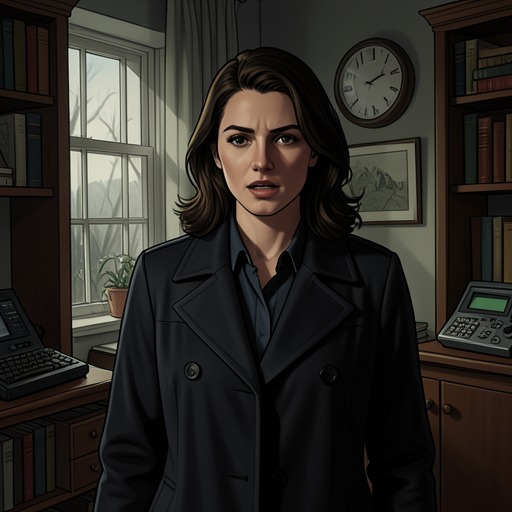
Event 1
TifAni FaNelli’s assault at Dean’s party
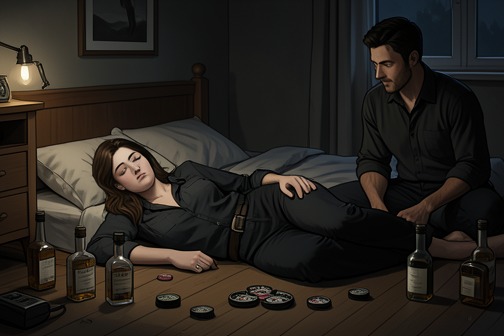
[TifAni FaNelli](entity:character-recall-character-tifani-fanelli-97805a8e399b)’s assault at [Dean Barton](entity:character-recall-character-dean-barton-cfcd888ea2da)’s party is a turning point in how she understands her past: a night she initially struggles to remember is later named as sexual assault, while the people around her recast it as drunken misbehavior. The gap between what happened and the harmless party story [Dean](entity:character-recall-character-dean-5af71f32c298) tells helps explain why TifAni’s memories return with uncertainty, shame, and a lasting tendency to blame herself.
## The Party and the Loss of Control
At Dean’s house, TifAni drinks whiskey during a game of quarters. She is already searching for [Liam](entity:character-recall-character-liam-b590d5f3bf76), whom she wants to be near, when [Peyton](entity:character-recall-character-peyton-5a0ca7dabdc1) is beside her and suggests she sit out another round. Dean pours more drinks anyway. Soon afterward, TifAni’s recollection breaks: she understands that she must have fallen asleep, and next remembers waking on the floor of a guest bedroom with Peyton there. She cannot recall the transition from the living room or give an account of the intervening time.
The scene’s gaps are part of the event’s significance. TifAni’s later narration does not present a complete, uninterrupted memory; it marks the difference between what she can recall and what she learns afterward. Her disorientation and inability to feel or understand what is happening are not evidence of consent. The event is ultimately described as an assault, and later, when questioned by police, she identifies Dean, Liam, and Peyton as having assaulted her at Dean’s house.
TifAni’s memory then shifts to Liam. She wakes in pain with him close to her, followed by another fragment in which she is in the guest bathroom, confused by blood in the toilet. These recollections register the consequences without giving her a coherent account of how the night unfolded. The novel’s broken sequence makes the reader experience the same uncertainty that shapes TifAni’s first attempts to explain what happened.
## The Morning After and Its Cover Story
In the morning, TifAni wakes in a room she does not recognize. Dean is there, and she realizes she is not fully dressed. When she asks about her pants, he laughs and presents her wandering around without them as a funny party anecdote. He offers her a towel and sends her to the guest room, where she finds her underwear and puts it in her gym bag, ignoring the blood.
Dean’s account turns the night into ordinary student-party comedy, comparable to stories about boys who pass out in a car or make a late-night sandwich without its main ingredient. In his telling, TifAni is merely the punchline. Still uncertain and vulnerable to that explanation, she laughs weakly with him. The contrast is consequential: Dean’s casual version supplies a socially convenient interpretation before TifAni can make sense of her own fragmented memory.
The next morning, TifAni tries to tell Liam that she does not know how she ended up in Dean’s room and feels she should apologize because she did not want to hook up with someone. Liam laughs and treats the experience as an unremarkable encounter with Dean. He uses Dean’s nickname for her, a small detail that TifAni later understands as part of his effort to fit in with him. Dean calls Liam away, leaving TifAni to suppress her tears rather than continue the conversation.
## Aftermath, Self-Blame, and Recognition
The failed conversation leaves a durable memory: TifAni remembers that she apologized to the person she later names as her rapist, and that he laughed. In adulthood, that recollection returns when she feels happy or proud, turning the moment into an accusation against herself. The lasting injury is not only the assault but also the story she initially accepts—that she has done something shameful and is responsible for repairing the situation.
At breakfast with Liam, Dean, and two younger soccer players, Liam again chooses to sit by Dean rather than TifAni. She forces herself to laugh along while feeling increasingly unwell. Afterward, she waits outside Minella’s Diner for her mother, frightened about pregnancy and disease. Years later, she recalls that she could drink large amounts of water without easing the feeling that something was wrong. The episode thus persists in bodily anxiety and health fears, not only in conscious recollection.
Liam gives TifAni a specific statistic about the chance of pregnancy, which she accepts even though he was among the people involved in the assault. She considers going to [Planned Parenthood](entity:organization-recall-organization-planned-parentho-957aee035794) for emergency contraception, but his response minimizes the urgency. The detail later acquires a bitter irony: TifAni learns that Liam had found her incapacitated and that his account of her waking did not establish consent. Her willingness to rely on his reassurance shows how thoroughly the first explanations of the night have displaced her own uncertainty.
## Public Meaning and Lasting Consequences
TifAni’s understanding changes over time. At first she tries to apologize, accepts Dean’s comic framing, and lacks a clear memory of the night. Later she names what happened as rape and tells investigators that Dean, Liam, and Peyton assaulted her at Dean’s house. She distinguishes this account from a separate assault by Dean at [Olivia Kaplan](entity:character-recall-character-olivia-kaplan-42d81c04661a)’s house. The later testimony gives the fragmented memories a clearer meaning without erasing the years in which she doubted herself.
The assault also sits within a school culture where sexual violence is discussed through inadequate rules about drinking and consent. At a student seminar, a moderator offers the simplistic principle that it is rape only when someone is too drunk to consent; TifAni, who has been assaulted while incapacitated, recognizes the danger in such a formulation. Her later recollection of the seminar shows how public explanations can reinforce the same uncertainty and self-blame that followed the party.
After the Bradley shooting, the event is drawn into a wider struggle over TifAni’s credibility. During police questioning, [Detective Dixon](entity:character-recall-character-detective-dixon-4076215c9fef) asks whether she and Dean were friends, and [Detective Vencino](entity:character-recall-character-detective-vencino-f9dd91f5ebbd) challenges why she would try to save Dean from [Arthur](entity:character-recall-character-arthur-2e33b65bbe57) if Dean had assaulted her. TifAni answers that she was trying to save herself. Her account of the party is thus tested against the investigators’ assumptions about friendship and motive, rather than simply received as testimony.
The party’s consequences also remain entangled with TifAni’s later guilt about Peyton. After the shooting, he dies from smoke inhalation in the cafeteria fire, and she says she will never stop hating herself for leaving him there. This later loss does not undo what happened at Dean’s house or make TifAni responsible for Peyton’s actions. Instead, it deepens the unresolved conflict between recognizing the harm done to her and carrying guilt for what happened to others. The event’s lasting significance lies in that collision: an assault first disguised as a joke becomes a memory she must repeatedly reclaim from shame, denial, and the public stories told about her.
Event 2
Dean's party assault
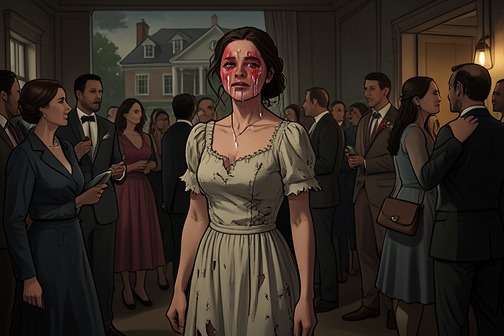
The assault at [Dean Barton](entity:character-recall-character-dean-barton-cfcd888ea2da)’s party is a pivotal event in [TifAni FaNelli](entity:character-recall-character-tifani-fanelli-97805a8e399b)’s remembered adolescence: it leaves her trying to manage its physical and emotional consequences without a clear answer about what happened, while the people around her turn the aftermath into a test of her credibility. The novel does not present the party as an isolated episode. Its significance accumulates through the clinic visit, the changes in TifAni’s relationships and behavior, and the later scrutiny of her account.
## Causes and Context
As an adult, TifAni recalls that she was fourteen when she experienced the events at Dean Barton’s house. In a later account to investigators, she identifies [Dean](entity:character-recall-character-dean-5af71f32c298), [Liam Ross](entity:character-recall-character-liam-ross-3885c7e69627), and [Peyton Powell](entity:character-recall-character-peyton-powell-946b493ccdbe) as having assaulted her there. The story also distinguishes a separate assault by Dean at [Olivia Kaplan](entity:character-recall-character-olivia-kaplan-42d81c04661a)’s house; keeping the two episodes separate matters, because Dean’s later apology concerns that other incident rather than resolving what happened at the party.
The assault unfolds within a school environment where TifAni’s standing is precarious. After Dean’s party, her mother grounds her for two weeks, and the broader punishment lasts through the rest of the month. At school, TifAni is still allowed to sit at the lunch table, largely through the support of [Hilary](entity:character-recall-character-hilary-d628d92956d3) and Dean, but the rest of the group seems relieved by her absence. Her isolation is treated as a social inconvenience and a possible contagion, rather than as a reason to ask what she needs.
## Medical Response and Immediate Aftermath
The medical visit gives TifAni practical care but no certainty about how to name the event. She asks whether an assault can be rape if she cannot remember what happened. The doctor says she is not qualified to answer, then leaves. The scene therefore places the question of consent and memory before a professional who declines to resolve it; TifAni is left with the uncertainty rather than a clear explanation.
A nurse gives her twelve pills as emergency contraception: six to take immediately and six more twelve hours later, at four in the morning. The nurse also gives her a paper bag of condoms. TifAni experiences the instructions and the bag as a jarring mismatch: the medical advice offers a procedure for managing risk, while the condoms cannot address what has already happened. The account does not claim that this care answers her question about the assault.
[Liam](entity:character-recall-character-liam-b590d5f3bf76) is not in the waiting room when TifAni returns, and she asks the receptionist where he has gone. She had asked him to accompany her to get the emergency contraception, an act she later describes as unusually difficult for someone who finds it hard to ask for what she wants. His written reminder to himself to treat her as a friend becomes a small but painful sign of distance. The episode joins the practical aftermath of the party to the emotional consequence of feeling unable to ask for care or closeness.
## Changes in Relationships and Behavior
In the weeks after the party, TifAni’s body and daily life register distress that she does not openly explain. Nearly three weeks later, [Olivia](entity:character-recall-character-olivia-b40a5119f315) notices that TifAni looks thinner. TifAni attributes the change to cross-country running, but recalls that she could stomach only cantaloupe and that her running times were worsening. Mr. Larson urges her on, though his calls sound exasperated rather than encouraging. The contrast between the explanation she gives and what she remembers eating makes the cost of concealment visible without turning the weight loss into proof of any single diagnosis.
The party also becomes a list of names that TifAni cannot escape. When [Arthur Finnerman](entity:character-recall-character-arthur-finnerman-4d2497361167) tells her that he has heard about what happened, he names Liam, [Peyton](entity:character-recall-character-peyton-5a0ca7dabdc1), and Dean, then adds the emergency contraception. TifAni objects to having the experiences recited back to her in a list. The exchange shows how information about her private trauma circulates among students, while the person at its center has little control over how it is repeated or understood.
## Later Accounts and Public Judgment
After the Bradley attack, investigators return to Dean and ask TifAni about her relationship with him. She says they were not exactly friends, and later confirms that she accused Dean, Liam, and Peyton of assaulting her at his house, as well as Dean at Olivia’s house. The questioning collapses these painful accounts into a challenge about why she tried to save Dean from [Arthur](entity:character-recall-character-arthur-2e33b65bbe57). TifAni answers that she was trying to save herself. The exchange exposes the unfair premise that an attempt to protect someone in a later crisis disproves an earlier assault.
The public account of the Bradley attack brings further suspicion. Dean claims that Arthur handed TifAni the gun and told her to kill him as planned, a claim TifAni says is false. The media and public focus on the possibility that not everyone responsible for the attack will face justice, while Dean’s popularity and future prospects lend his account social authority. This controversy is not the party assault itself, but it deepens the conditions in which TifAni’s earlier disclosures are judged: her actions are interpreted against the testimony and reputation of a celebrated former classmate.
## Narrative Significance
The event’s consequences are narrated through fragments of aftermath rather than a single definitive explanation. A question in a clinic, a timed dose of pills, a friend’s distancing reminder, a change in eating, and a school lunch table each reveal a different part of what the party leaves behind. None alone supplies a complete account; together they show how trauma persists through practical decisions, strained relationships, and the repetition of other people’s versions of events.
TifAni’s later willingness to name the assaults to investigators contrasts with the uncertainty and silence surrounding her younger self. The distinction is central to the event’s place in the novel: telling what happened does not automatically secure belief, erase the consequences, or restore control over the story. The party remains a source of both private injury and public dispute, and its aftermath demonstrates how easily a survivor’s attempt to make sense of an event can be overtaken by other people’s judgments.
Event 3
Dean’s assault on TifAni at Olivia’s house

[Dean](entity:character-recall-character-dean-5af71f32c298)’s assault on TifAni at [Olivia Kaplan](entity:character-recall-character-olivia-kaplan-42d81c04661a)’s house is a turning point in which her effort to manage an unwanted advance gives way to a struggle to escape, followed by an unexpected interruption and her first sustained disclosure of what happened. The sequence is shaped by diminishing control: the group disperses without TifAni noticing, Dean is left beside her, and her attempts to redirect him do not stop his actions. Her flight carries the event beyond the house, into a public place where [Andrew Larson](entity:character-recall-character-andrew-larson-af011a402a48) recognizes her and becomes the person to whom she tells the story.
## Setting and Isolation
Earlier in the evening, TifAni had been smoking a joint with [Liam](entity:character-recall-character-liam-b590d5f3bf76) and the others. After Liam went inside, she realized that Olivia Kaplan had also disappeared. She looked toward the house, but the kitchen was empty. When she said she was cold and wanted to go inside, Dean instead drew her toward him. At that point, she understood that he was the only person still with her. The group’s departure is not something she had consciously tracked; her attention is on her impaired state and on trying to orient herself. That unnoticed change in the scene leaves her isolated with Dean.
Her words and actions convey resistance without making the situation safe. TifAni lowered her head to avoid Dean’s approaching mouth and said she was cold. Even as she gave in to the kiss, her hands continued to push against his chest before she moved them around his neck. When Dean began undoing her trousers, she tried to end the kiss calmly. She proposed going inside, but the suggestion was a way to redirect what was happening, not an invitation to continue it. The gap between the appearance of accommodation and the resistance still evident in her actions is central to the scene: her effort to manage Dean does not amount to freely choosing what follows.
## Escalation and Interruption
The attempt to redirect Dean fails. He responds to her proposal by seizing the button of her trousers, and TifAni falls backward. When she cries out, Dean tells her to be quiet and slaps her. The narrative presents that moment as the point at which her controlled, tactical responses give way to a scream and an instinctive effort to survive. This is not simply a change in the physical situation; it is a change in what she can do. She is no longer trying to preserve the appearance of a flirtation or to find a socially manageable way out. She is trying to get away.
The interruption comes from the house. Lights come on, [Olivia](entity:character-recall-character-olivia-b40a5119f315)’s father shouts, and Olivia Kaplan rushes outside and orders TifAni to leave and not return. Dean has TifAni’s trousers lowered when this happens. TifAni runs toward the gate, but her hands shake over the latch. Dean pushes past her and releases the hook. He then holds the gate open, allowing her to escape as well. That action does not undo the assault or make his earlier conduct less coercive; it is a brief, striking contradiction within the escape itself. The other boys head toward a vehicle parked on the street, and TifAni turns away from it, choosing a direction that takes her away from the group.
## Flight and Search for Help
TifAni does not know where she is going. She continues along unfamiliar roads, repeatedly believing that a turn will take her toward the main road. When a car approaches, she tries to ask its driver for directions. The driver reacts with fear and speeds away, leaving TifAni without help. The episode underscores how difficult it is for her to make herself understood or to be recognized as someone in need: her appearance prompts alarm rather than assistance.
Eventually, a road opens onto a line of streetlamps and a Wawa. TifAni runs there, enters, and asks whether Montgomery Avenue is farther ahead. The cashier notices that she is slurring her words and asks whether she is all right. TifAni says she tripped. When the cashier reaches for the phone, apparently intending to call the police, she remains unable to explain what happened. Her brief denial preserves the silence she has carried out of the house, even as the cashier’s concern offers a possible route to help.
## Disclosure and Immediate Aftermath
Andrew Larson arrives at Wawa and calls TifAni by name. He guides her outside, clears the takeout bags from the passenger seat, and urges her into his car. Being found breaks down her effort to keep the incident hidden: she begins telling him what happened and cannot stop. The movement from a public counter to Andrew Larson’s car marks a change in the event’s direction. Until then, TifAni has been trying to escape and to conceal what has happened; with someone she knows present, she can begin to disclose it.
Andrew Larson gives her a blanket, water, and an ice pack for her face, and wants to take her to a hospital. TifAni becomes so distressed at that suggestion that he agrees to bring her to his apartment instead. The account emphasizes the practical sequence of care: he gets her away from the public setting, offers immediate comfort, and helps her calm down and sober up. TifAni does not then question his ability to handle the situation. In retrospect, she understands that his apparent confidence was not simply the natural authority of an older adult: Andrew Larson was twenty-four, while she was fourteen. That later recognition complicates the memory of his help without changing what he did in the moment.
The event therefore ends not with a resolution of the harm but with a break in TifAni’s isolation. Olivia Kaplan and her father interrupt the assault, TifAni gets away from the house, and Andrew Larson gives her a setting in which she can speak. The transition from attempted concealment to disclosure is the immediate consequence of being found; the fear, disorientation, and need for help remain part of the aftermath.
Event 4
TifAni’s withdrawal of her accusation against Dean during the school investigation
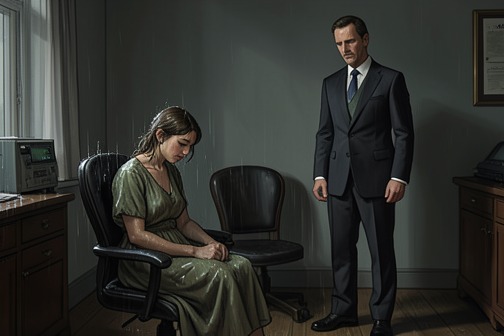
[TifAni FaNelli](entity:character-recall-character-tifani-fanelli-97805a8e399b)’s withdrawal of her accusation against [Dean Barton](entity:character-recall-character-dean-barton-cfcd888ea2da) during the school investigation turns on a denial made under institutional and social pressure. Called into [Headmaster Mah](entity:character-recall-character-headmaster-mah-adfa1cf24245)’s office after [Andrew Larson](entity:character-recall-character-andrew-larson-af011a402a48) reported another issue involving [Dean](entity:character-recall-character-dean-5af71f32c298) and [Liam Ross](entity:character-recall-character-liam-ross-3885c7e69627), TifAni said nothing had happened, despite a cut on her face. The school’s relief, Dean’s swift suspicion, and TifAni’s later account of why she stayed silent show how a private retreat became part of a larger pattern of humiliation and self-blame.
## The Meeting and the Denial
On Monday morning, Andrew Larson had already spoken to Headmaster Mah about another issue involving Dean and the new student Liam Ross. TifAni was summoned before reaching homeroom. She passed through the school and into the administration wing, where Andrew Larson stood in the corner of Headmaster Mah’s office and left the single chair open for her. She avoided his gaze and focused on her rain-marked clogs as she denied everything. In her recollection, the physical details register the discomfort of the meeting without explaining the cut on her face or establishing precisely what had happened over the weekend.
Headmaster Mah asked whether she had an incident to report and appeared relieved when she said she did not. His relief was not separate from the school’s interests: the Barton family had financed a new cafeteria addition. The detail gives the meeting an institutional dimension. The headmaster was responding not only to a student’s account but in a school where Dean’s family had contributed materially. The narrative does not establish that the donation caused TifAni’s denial or dictated the school’s actions; it does place the headmaster’s relief beside the family’s influence, making the school’s response difficult to read as neutral.
The cut on TifAni’s face was barely covered with concealer. Headmaster Mah noticed it, but TifAni still said there was nothing to report. The account does not identify the cut’s cause, so it cannot serve as proof of a particular incident. Its presence instead sharpens the contrast between what is visible and what she is prepared to disclose: the injury is noticed, while the account that might give it meaning is withheld.
## Andrew Larson’s Challenge
After the meeting, Andrew Larson demanded to know what had happened. TifAni asked him to let it go and kept walking. He seemed to want to stop her, but did not touch her; she moved faster, trying to escape his disappointment. The scene does not turn her silence into an easy choice. Andrew Larson recognizes that something is wrong and presses her to speak, while TifAni responds by ending the exchange rather than accepting his help.
Her later explanation makes the social stakes explicit: she was afraid that speaking up would cost her popularity, and she became angry with herself for letting Dean get away with it. She recalls having judged another student in college for not reporting an assault, only to recognize that she had not been able to report her own experience either. That reversal links the school meeting to a longer struggle over blame. TifAni’s earlier judgment of someone else becomes a means of understanding her own silence, not evidence that she had been free to act without fear.
## Dean’s Public Response
At lunch, Dean arrived carrying a tray and announced to the group at the table that he had received a warning about an incident over the weekend. He said he might be unable to play in the important Haverford game that week, though he could still play if nothing else happened before then. [Peyton](entity:character-recall-character-peyton-5a0ca7dabdc1) objected to the warning, and [Liam](entity:character-recall-character-liam-b590d5f3bf76) agreed. The discussion immediately made the school’s private intervention public among students, recasting the matter as a threat to Dean’s place on the team and his standing with his peers.
Dean then turned on TifAni. He asked whether she had been in Headmaster Mah’s office and pressed the implication that the school would not have summoned her unless she had said something. TifAni replied that Andrew Larson and Headmaster Mah had called her in and that she had not chosen to go. She offered no account of what had happened, and Dean treated the summons itself as evidence against her denial. The group laughed at his insult; [Olivia](entity:character-recall-character-olivia-b40a5119f315), Liam, and Peyton smirked, while [Hilary](entity:character-recall-character-hilary-d628d92956d3) avoided looking at TifAni. TifAni left the new cafeteria beneath a plaque crediting the Barton family, dated 1998. Her departure follows a meeting in which she withheld an account and a lunchroom scene in which that silence offered no protection from public suspicion.
## Retrospective Meaning
Years later, TifAni describes the moment as an instance of being unable to report what Dean had done. Her recollection carries both the fact of the denial and the cost of it: she wanted to preserve her popularity, then felt anger at herself for doing so. The narrative also places the episode within the culture of [The Bradley School](entity:location-recall-location-the-bradley-school-867a97908863), where Dean’s warning became a source of group discussion and the Barton family’s contribution stood visibly in the cafeteria. These details show the pressures around her decision without making them a complete explanation for it.
The scene is told retrospectively by TifAni, who can compare her younger self’s silence with her adult understanding of it. That structure lets the reader see the school meeting and lunchroom confrontation before hearing her later admission that she had been afraid. Her account resists a simple division between knowing what should be done and being able to do it: she remembers condemning another student for not reporting, then recognizes the same inability in herself. The withdrawal is therefore both a consequential act within the school investigation and a recurring source of self-reproach, bound to the social cost of disclosure and the school’s unequal distribution of protection.
Event 5
Ben Hunter’s bullying and suicide attempt
[Ben Hunter’s bullying and suicide attempt](entity:event-recall-event-ben-hunter-e0a1bdfc8e88) form an important prehistory to the Bradley School attack: a humiliating incident at a classmate’s graduation party was followed by [Ben](entity:character-recall-character-ben-964df7d0a5ee)’s disappearance and a suicide attempt, while the later record reveals how [Arthur Finnerman](entity:character-recall-character-arthur-finnerman-4d2497361167) turned that crisis into an opportunity to draw Ben into a planned attack. The episode is first recounted to [TifAni FaNelli](entity:character-recall-character-tifani-fanelli-97805a8e399b) by [Arthur](entity:character-recall-character-arthur-2e33b65bbe57), then revisited through evidence gathered after the shooting. Its changing account shows how an act of cruelty could be both a personal catastrophe and part of a public story that simplified the violence that followed.
## The Graduation-Party Assault
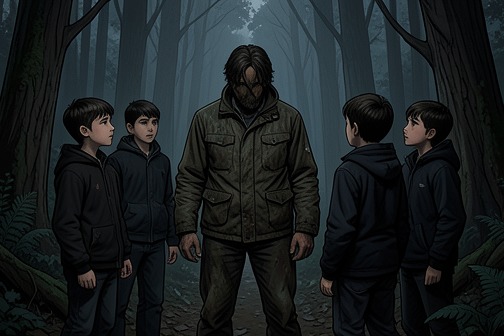
Arthur Finnerman places the incident at Kelsey Kingsley’s eighth-grade graduation party. Kelsey’s family lived on a large property with a pool and tennis courts. [Dean Barton](entity:character-recall-character-dean-barton-cfcd888ea2da), [Peyton Powell](entity:character-recall-character-peyton-powell-946b493ccdbe), and other boys from the older upper school arrived, although they were older than the party’s intended age group. Peyton Powell had taken an interest in Kelsey, and the group persuaded [Ben Hunter](entity:character-recall-character-ben-hunter-c6d61705c38d) to accompany them into the woods by saying they had marijuana.
There, the boys restrained and humiliated Ben. Arthur’s account identifies Dean Barton as the person who carried out the central degrading act. The incident was not described as a brief disagreement: it involved several older boys acting together against Ben, and it left him to flee after they let him go. In Arthur’s telling, the episode made the imbalance of power plain. Ben was isolated, outnumbered, and subjected to deliberate humiliation by boys who had drawn him away from the party under a pretext.
## Disappearance and Suicide Attempt
After escaping, Ben Hunter ran and could not be found for almost twenty-four hours. He was eventually discovered in a bathroom at a Rite Aid near Suburban Square. Arthur says that Ben had bought a razor and attempted suicide. He survived, but the attempt marked a serious crisis rather than an isolated aftermath to the party. At the time Arthur later spoke to TifAni FaNelli, Ben was in an institution; Arthur placed the attempt only six months in the past.
Arthur’s manner of discussing the episode is also part of the account. He tells TifAni while they are eating ice cream and looking at a yearbook, and he acknowledges that the story is disturbing before proceeding. His explanation gives TifAni information about Ben’s history, but it also reveals how readily Arthur can describe another person’s suffering at a remove. When asked whether he kept in touch with Ben, Arthur says that he liked him but regards him as having problems. The casual distance of that response contrasts with the severity of the events he has just described.
## From Personal Crisis to a Planned Attack
Later evidence changes the significance of the attempt. In Arthur Finnerman’s diaries, he described visiting Ben Hunter in the hospital less than two weeks after the attempt and raising the idea of an attack on the Bradley School. Ben’s hospitalization had placed him under care, but Arthur’s account of the visit emphasizes their effort to find private time together. Arthur had access to his father’s gun and considered ways to obtain identification and make bombs. The diaries and subsequent psychological review indicate that the plan developed over six months, while Ben spent much of that period in a mental rehabilitation center and presented himself as no longer suicidal.
The records describe Ben as depressed and as wanting to die; they also identify his wish to make his tormentors pay as part of his participation. That does not make the graduation-party assault a sufficient explanation for the later attack. The post-attack investigation concluded that Arthur Finnerman initiated the plan and held the dominant position in the pair. In this account, Ben’s despair and anger provided an opening for Arthur’s proposal, but the two boys’ roles and motives were not interchangeable. The earlier attempt is therefore both a consequence of the cruelty Ben endured and a point at which Arthur began recruiting him into a different course of violence.
## Retrospective Meaning and Public Memory
After the attack, the media commonly explained [Arthur Finnerman and Ben](entity:relation-recall-relation-arthur-finnerman-and-b10a5ddb749a) Hunter as boys bullied for being strange, overweight, or gay. The investigative record, as TifAni FaNelli later reads it, complicates that account. Arthur was widely understood to be gay, but Ben was not; a rumor that Arthur and Ben had been sexually involved was false. The rumor nevertheless hurt and angered Ben, and Arthur’s diary connected it to his own later manipulation of Ben. The evidence thus distinguishes the documented humiliation at Kelsey Kingsley’s party from the simplified bullying explanation that came to dominate public discussion.
The attempt also returns through TifAni’s memories of the school shooting. During the armed attack, [The Shark](entity:character-recall-character-the-shark-2652ab41337a) recognizes Ben Hunter by name and pleads with him, making the earlier story of his crisis newly present inside the later violence. The connection is not a claim that the suicide attempt made the attack inevitable. Rather, the sequence exposes how an injury that had once been treated as Ben’s private emergency became part of a larger chain involving manipulation, planning, and lethal consequences.
The public effort to assign responsibility relied on journals, school records, interviews, and expert assessments to identify who led the pair and how their partnership developed. That investigation rejected a single-cause account while preserving the importance of Ben’s earlier victimization. TifAni’s retrospective narration likewise holds two facts together: the assault at the party was a grave act of cruelty, and the attack that followed cannot be reduced to retaliation for it. The episode matters because it shows both the damage done to Ben before the shooting and the limits of using that damage as a complete explanation of what came next.
Event 6
Arthur Finnerman’s expulsion from Bradley
[Arthur Finnerman’s expulsion from Bradley](entity:event-recall-event-arthur-finnerman-bradle-110c04fcb09e) begins with a classroom insult and ends with a break in his friendship with [TifAni FaNelli](entity:character-recall-character-tifani-fanelli-97805a8e399b). In TifAni’s recollection, [Arthur](entity:character-recall-character-arthur-2e33b65bbe57) steps between her and a teacher who is humiliating her, then is removed from class; the next day, [The Shark](entity:character-recall-character-the-shark-2652ab41337a) tells TifAni that he has been expelled. The school’s decision is a turning point in their relationship as well as a glimpse of the anger and past discipline that later acquire a darker meaning.
## The Classroom Confrontation
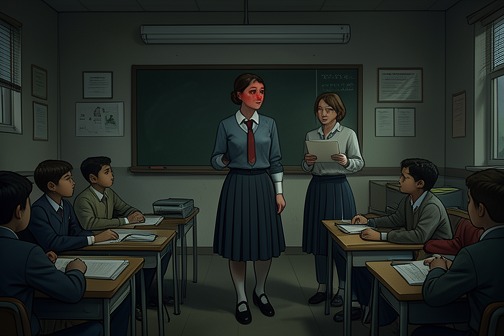
Arthur and TifAni regularly pass notes, including in class. During an English lesson, he adds a disparaging example to a note they have been sharing, and TifAni’s laughter draws the class’s attention. Mrs. Hurst calls TifAni to the front of the room and has her write on the board, turning the grammar exercise into a public humiliation. TifAni complies rather than risk challenging a teacher in front of her classmates; she has been raised to obey that authority, even when she feels exposed.
Arthur reacts on her behalf. He curses at Mrs. Hurst, stands, and moves toward her, placing himself between the teacher and TifAni. His size and anger make the confrontation appear threatening to the people in the room. TifAni puts a hand on his arm, trying to intervene, while Mrs. Hurst calls for help. The moment reveals their closeness in a concrete way: Arthur does not remain a silent audience to TifAni’s humiliation, and she tries to restrain him even as he defends her.
## Removal and Expulsion
Mr. Friedman comes to the front of the classroom and directs Arthur to go to Mr. Wright’s office. The narration notes that teachers are wary of touching students because of rumors about a required sexual-harassment seminar, so Mr. Friedman holds a hand above Arthur’s back rather than taking hold of him. Arthur shrugs off the gesture and leaves ahead of him. His departure ends the immediate confrontation, but it does not resolve what the school will do.
TifAni does not see Arthur again at school that day. After practice, she walks to his house, knocks repeatedly, and gets no answer. He is absent the following day too. At lunch, The Shark tells TifAni that Arthur has been expelled. TifAni is stunned by the finality of the decision and believes he did not do enough in the classroom incident to deserve it. The expulsion is therefore first presented not as a settled judgment of Arthur’s conduct, but through TifAni’s shock and sense that the punishment is out of proportion.
## The Earlier Incident and the School’s Decision
The Shark explains that the classroom confrontation was not Arthur’s first disciplinary problem. She had heard that he was suspended the previous year for stomping on a fish during biology class. She was not present, and TifAni had not known about the incident. According to The Shark, [Dean Barton](entity:character-recall-character-dean-barton-cfcd888ea2da) and other boys dared Arthur to do it. The detail changes the immediate account: the expulsion followed an earlier suspension, even though TifAni had understood the classroom episode as an isolated conflict.
The Shark calls the earlier episode a possible final straw, rather than claiming to know the school’s reasoning. The exact decision-making process is not described. TifAni’s response is to focus on what she sees as the injustice of expelling Arthur while Dean Barton remains at Bradley. Her certainty about who deserves punishment differs sharply from the school’s apparent response to Arthur’s record, and the gap between those judgments becomes part of the tension surrounding the expulsion.
## A Friendship Turns into Conflict
After hearing the news, TifAni returns to Arthur’s house. He lets her in, and they sit on his bed and pass a bowl between them. When she asks whether the expulsion is truly final, he confirms that it is. Her immediate anger remains directed at Dean Barton, whom she believes should have been expelled instead.
The conversation then shifts from the school’s decision to TifAni’s earlier choice not to pursue Dean Barton over his conduct toward her. Arthur reproaches her for believing she could redeem herself by taking action, then attacks her intelligence and self-worth. TifAni recognizes that she had understood their friendship as an alliance between equals, united against the school’s social hierarchy. Arthur’s contempt makes her reconsider that understanding: she now feels that he regarded her as a rejected outsider whom he had taken in, not as a friend who had chosen him in return. She answers by turning the argument toward Arthur’s fixation on Dean Barton. The exchange does not repair the hurt caused by the expulsion; it exposes a deeper fracture in what each thought the friendship meant.
## Retrospective Significance
The later account of the Bradley attack gives Arthur’s expulsion an unsettling place in the larger narrative, but it does not establish that the expulsion caused the attack or that the school understood what Arthur would do. Afterward, psychologists examine Arthur and [Ben Hunter](entity:character-recall-character-ben-hunter-c6d61705c38d)’s journals, school records, and interviews with people who knew them. Their shared conclusion is that Arthur initiated the plan. The novel also complicates the public explanation that the pair acted because they were bullied: later evidence describes a broader and more deliberate motive for Arthur’s violence.
Seen in that wider context, the expulsion episode contributes to a portrait of Arthur that is not reducible to either TifAni’s loyal defense of him or the later public label of a dangerous student. The incident shows him protecting a friend, acting with uncontrolled anger, and carrying a disciplinary history TifAni does not know about. Its immediate consequence is separation from Bradley; its personal consequence is a rupture between Arthur and TifAni. Its retrospective force comes from the contrast between those intimate, unresolved events and the much larger violence whose meaning the survivors and the community later struggle to determine.